Physical Address
304 North Cardinal St.
Dorchester Center, MA 02124
Physical Address
304 North Cardinal St.
Dorchester Center, MA 02124


Your Saturday AI digest, 21 March 2026. A week’s worth of launches, deals, and at least one story that’s harder to file away than the rest.
Microsoft just broke into the top 3 for text-to-image generation. Amazon’s AI Alexa is live in the UK. Meta is putting AI in charge of its own support queue. And Val Kilmer is returning to the screen, sort of. Here’s what happened.

Microsoft’s MAI-Image-2 has entered the top 3 on the Arena.ai global leaderboard, placing it alongside Midjourney and Ideogram. Eighteen months ago, Microsoft wasn’t really in this conversation.
The team spent time with photographers, designers, and visual artists while developing the model, and the focus shows. Photorealism is noticeably improved, natural lighting, accurate skin tones, environments that don’t look synthetic. In-image text generation is also more consistent, which has been a weak point for most image models. Complex or surreal scene generation has improved too.
MAI-Image-2 is available now in the MAI Playground and is rolling out to Copilot and Bing Image Creator. Enterprise API access is live. Broader developer access is coming. If you’ve been sleeping on Microsoft’s image work, this is worth a look.

Amazon’s Alexa Plus, the generative AI rebuild of the original voice assistant, went live in the UK on March 19 as part of an Early Access programme. This is Alexa Plus’s first European launch. UK customers have used Alexa over 114 billion times in the past three years, so there’s a real install base to roll into.
The new version drops the repeat-the-wake-word requirement, holds context across a conversation, and can take actions on your behalf: resetting passwords, managing privacy settings, reporting scams, appealing content removals. It’s designed to stay in the background until you actually need it. During Early Access it’s free; afterwards, Prime members get it at no extra cost. Non-Prime users will pay £19.99/month.
The bigger picture: Google Assistant, Siri, and Alexa are all being rebuilt with generative AI at the core, and the UK is where they’ll start competing properly in Europe. It’s going to be an interesting few months for anyone who covers consumer AI.
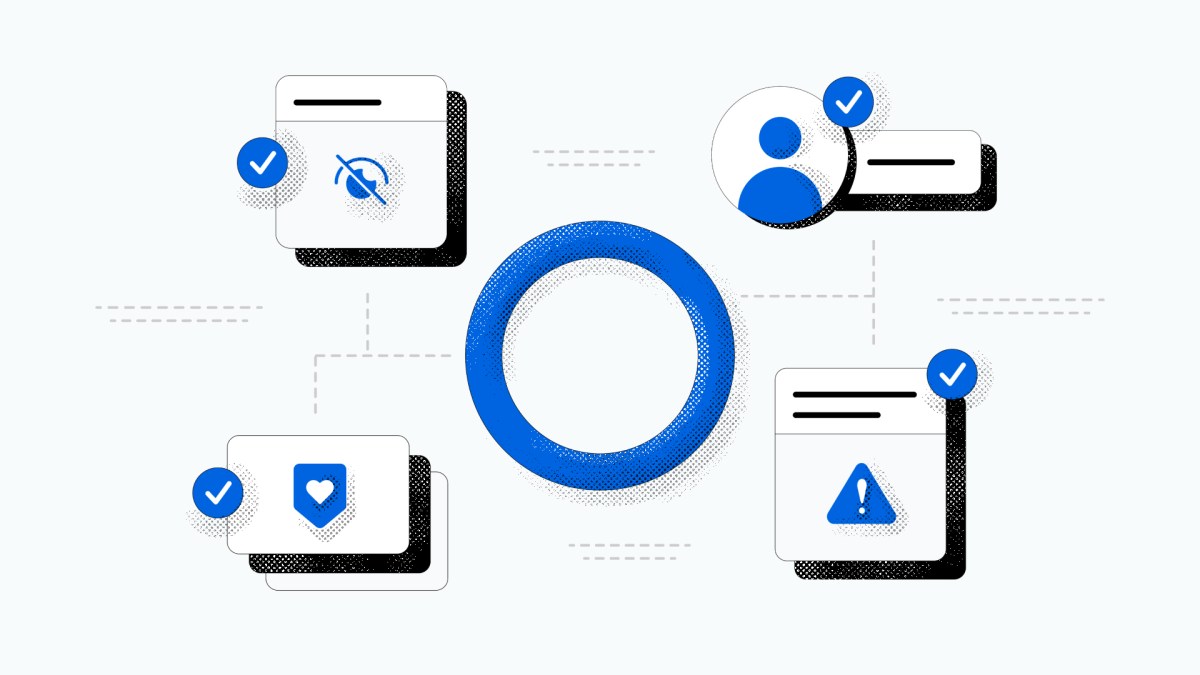
Meta has launched an AI support assistant across Facebook and Instagram in all markets where Meta AI is available. The assistant handles account issues directly, reporting scams, managing privacy settings, appealing content removals, resetting passwords, with response times typically under five seconds. That’s genuinely faster than the old ticket queue.
Meta is also using AI to catch more severe policy violations, with the stated aim of reducing both missed violations and false positives. Whether that claim holds up in practice remains to be seen. Meta’s content moderation track record is mixed at best, and AI enforcement at this scale raises real questions about edge cases and appeals.
What’s worth noting is how Meta is framing this: not as a cost reduction, but as the only way to run moderation at the scale of billions of users. That framing is becoming common across big platforms, and it’s worth watching how it plays out in practice versus in press releases.

Moxie Marlinspike, the cryptographer behind Signal, is working to bring end-to-end encryption to Meta AI through his company Confer. The integration is meant to sit at the foundation level, not layered on top as an optional feature.
Marlinspike doesn’t historically take on projects he’s not serious about. If this ships in the form he intends, it would be the first major AI assistant with real cryptographic privacy guarantees. The question is what Meta actually allows: genuine end-to-end encryption for AI conversations would limit what Meta can learn from those conversations. That tension is worth watching as this develops.
$70 billion in data centre acquisitions have been discussed or closed in 2026 so far, driven by SoftBank, DigitalBridge, and others buying up infrastructure to meet AI compute demand. The pattern is straightforward: AI labs need more GPU capacity than they can build fast enough, so companies are acquiring the physical infrastructure instead.
Physical data centre ownership is now a strategic position in the AI market. Expect the consolidation to continue through the year, there’s no sign that model training or inference demand is levelling off.

Val Kilmer died in 2025 after years of battling throat cancer. He’d been cast as Father Fintan in As Deep as the Grave, a film director Coerte Voorhees had written specifically around him, but never made it to set. Voorhees has now recreated Kilmer’s performance using generative AI, using archival images provided by the family and reconstructed audio.
His daughter Mercedes and son Jack are both supportive. Kilmer had spoken clearly about wanting to be part of the project. The film stars Tom Felton, Abigail Breslin, and Wes Studi, and is about Southwestern archaeologists working in Canyon de Chelly, Arizona. The AI-generated Kilmer will appear in a significant portion of the film.
I find this genuinely hard to categorise. On consent, it’s the cleanest case we’ve seen, the actor wanted it, and his family agreed. That doesn’t resolve every question about posthumous AI recreation, but it does change the ethical weight of this specific instance. We’ll be having this conversation many more times.
MAI-Image-2 is Microsoft’s second-generation text-to-image model, now ranked #3 on the Arena.ai global leaderboard. It’s available in the MAI Playground and rolling out to Copilot and Bing Image Creator. Enterprise API access is live. Key improvements: photorealism, in-image text generation, and complex scene generation.
During the current Early Access programme, yes, it’s free for all users. After Early Access ends, Prime members get it at no extra cost. Non-Prime users will pay £19.99 per month.
Kilmer’s estate, his daughter, and his son all support it. Kilmer himself wanted to be part of the film before his death. That’s the clearest documented consent we’ve seen for a posthumous AI recreation. Broader questions about the practice remain, but this case has a stronger ethical footing than most.
AI model training and inference require enormous amounts of compute. That compute lives in data centres. Companies that can’t build capacity fast enough are acquiring it instead. SoftBank and DigitalBridge are among the players consolidating infrastructure to supply AI labs with the GPU capacity they need.
We publish a fresh AI digest every day at FridayAIClub.com. If this was useful, bookmark it or share it with someone who tracks AI. Subscribe to get it straight to your inbox, no noise, just the stories worth knowing about.