Physical Address
304 North Cardinal St.
Dorchester Center, MA 02124
Physical Address
304 North Cardinal St.
Dorchester Center, MA 02124


The week’s most interesting AI news in one place , Wednesday, March 25, 2026. Here’s what’s worth your attention today.
The theme running through today’s stories is something worth sitting with: AI is moving from passive tool to active operator. Meta’s AI isn’t just answering questions , it’s managing your account. Moxie Marlinspike isn’t just building a privacy startup , he’s baking it into the world’s largest AI assistant. These aren’t incremental updates. They’re structural shifts.

This one caught me off guard. Moxie Marlinspike , the person who built the Signal Protocol that gave WhatsApp end-to-end encryption for billions of people , has been quietly building a company called Confer, which encrypts AI conversations so completely that not even Marlinspike himself can read them.
Now he’s integrating Confer’s technology into Meta AI’s foundation. His argument is blunt: AI chat apps have already become some of the largest centralised data stores in history, containing medical records, financial details, private thoughts. None of it is currently encrypted. “It will inevitably end up in the wrong hands,” he writes.
Ten years ago he did this for messaging. Now he’s doing it for AI. Whether Meta actually deploys this at scale , and whether it survives contact with Meta’s actual business model , is genuinely unclear. But the fact that Marlinspike is involved at all changes the conversation. His credibility on encryption is about as solid as it gets. Read his full post at confer.to.
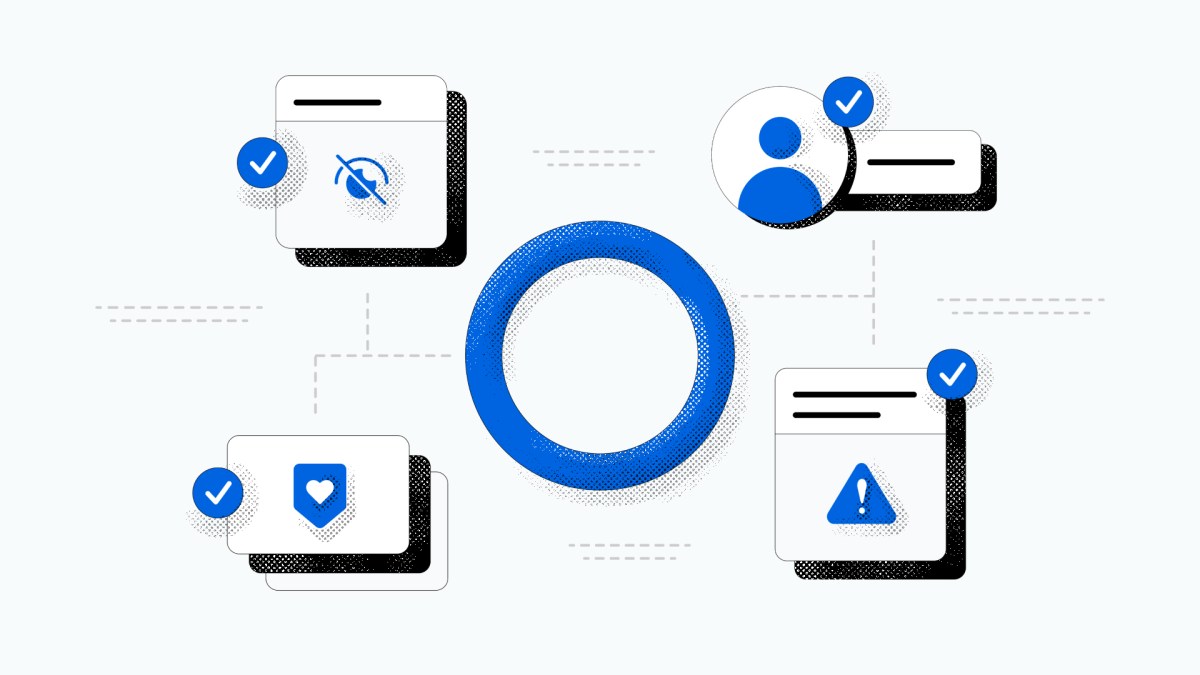
Meta has rolled out an AI support assistant across Facebook and Instagram in regions where Meta AI is already available. This isn’t a FAQ bot. It handles account problems from start to finish: reporting scams, appealing content removals, managing privacy settings, resetting passwords. It responds in under five seconds.
The interesting piece isn’t the speed , it’s the scope. The AI can take action directly inside Facebook, with Instagram integration coming. That’s a meaningful shift from previous support tools, which would surface help articles and then leave you to figure it out. Whether this actually reduces frustration, or just adds a new layer to ignore before you give up, probably depends on how well it handles edge cases. Meta says it also improves scam detection, with fewer over-enforcement mistakes on legitimate content.
Details at Meta Newsroom.

Microsoft’s second-generation image model has landed on the Arena.ai leaderboard at number three globally , above most of what was considered state-of-the-art a year ago. MAI-Image-2 is rolling out to Copilot and Bing Image Creator, with API access already open to select partners.
The model’s strongest improvements are in photorealism , natural light, accurate skin tones, environments that look lived-in rather than rendered , and reliable text generation within images, which has historically been a weak point across the entire field. Microsoft says it built this in consultation with photographers, designers, and visual artists, which is the right way to approach it. Whether that translates to something genuinely useful for creative work, rather than just impressive on benchmarks, you can test now at MAI Playground.

Alexa+ , Amazon’s rebuilt, generative-AI version of Alexa , started rolling out in the UK on March 19 through an Early Access program. It’s the first European launch. UK customers have used the original Alexa over 114 billion times in the last three years, so the installed base is there. Whether they upgrade depends on whether this version is actually better, not just more capable on paper.
Pricing: free during Early Access, then free for Prime members or £19.99/month otherwise. It’s genuinely conversational rather than command-response, and designed to take real-world actions. How well that works in practice will become clear over the next few weeks. More at About Amazon.
The AI infrastructure spending spree has hit $70 billion in data centre M&A talks so far this year alone, according to Bloomberg Law. SoftBank’s acquisition of DigitalBridge is the most recent , but it’s part of a pattern that’s been building for months. Compute demand keeps expanding, and ownership of the infrastructure that supplies it is consolidating fast.
This matters beyond the dealmaking headlines. Who owns the data centres shapes who can afford to train and run frontier models at scale. The money isn’t just chasing AI , it’s trying to own the foundation that AI runs on. Full breakdown at Bloomberg Law.

Val Kilmer died in 2025. Before he died, he had been cast in “As Deep as the Grave” , a film built around a role designed specifically for him, drawing on his Native American heritage and ties to the Southwest. He never made it to set. He was too ill.
Director Coerte Voorhees has now used generative AI to put Kilmer in the film anyway, with the support of Kilmer’s estate and his daughter Mercedes. “His family kept saying how important they thought the movie was and that Val really wanted to be a part of this,” Voorhees told Variety.
I’m not sure what to make of this. The ethical territory here is genuinely complicated , the family consented, the director had a clear artistic intent, and Kilmer himself had expressed wanting to do the role. That’s a very different situation from, say, reanimating a celebrity for a commercial. But it’s also the kind of thing that will get easier and cheaper to do, for much worse reasons. Worth thinking about now, before the next case is more ambiguous. Full story at Variety.
FridayAIClub.com covers the AI developments worth tracking , the ones with real implications, not just benchmark announcements. Explore the site for more, or subscribe to get the daily digest in your inbox.