Physical Address
304 North Cardinal St.
Dorchester Center, MA 02124
Physical Address
304 North Cardinal St.
Dorchester Center, MA 02124

Welcome to your Sunday AI digest for 29 March 2026. This weekend delivered a double Anthropic story that dominated the discourse: a leaked next-generation model and the security failure that exposed it. There were also quieter but significant signs that AI infrastructure is maturing quickly.

Anthropic confirmed this week that it is developing and testing a new AI model called Claude Mythos, but not in the way the company intended. A draft blog post announcing the model was left in an unsecured, publicly searchable data cache, where Fortune and two cybersecurity researchers found it before Anthropic could take it down.
The leaked document describes Mythos as “by far the most powerful AI model we’ve ever developed,” a new tier internally referred to as Capybara in some references, sitting above the existing Opus line. According to the draft, it scores dramatically higher than Claude Opus 4.6 on software coding, academic reasoning, and cybersecurity benchmarks. The company confirmed to Fortune that Mythos represents “a step change” and is currently in early access testing with a small group of enterprise customers.
The security angle is hard to ignore. Anthropic’s own leaked draft warned that Mythos poses “unprecedented cybersecurity risks”: the company believes the model is “currently far ahead of any other AI model in cyber capabilities” and could enable large-scale attacks that outpace defenders. That is why Anthropic says it is releasing the model first to cybersecurity organisations, giving defenders a head start. OpenAI made nearly identical claims about GPT-5.3-Codex in February, so this is quickly becoming standard practice at frontier labs.
Reaction across Reddit and Hacker News was split: some were thrilled by the capability jump, others alarmed by the security lapse itself. The most-shared take on X: “If Anthropic can’t secure its own CMS, what does that say about AI companies handling sensitive data?” AI researchers flagged the cybersecurity risk disclosure in the leaked draft as the real story, not the capability improvements. That is a fair read.
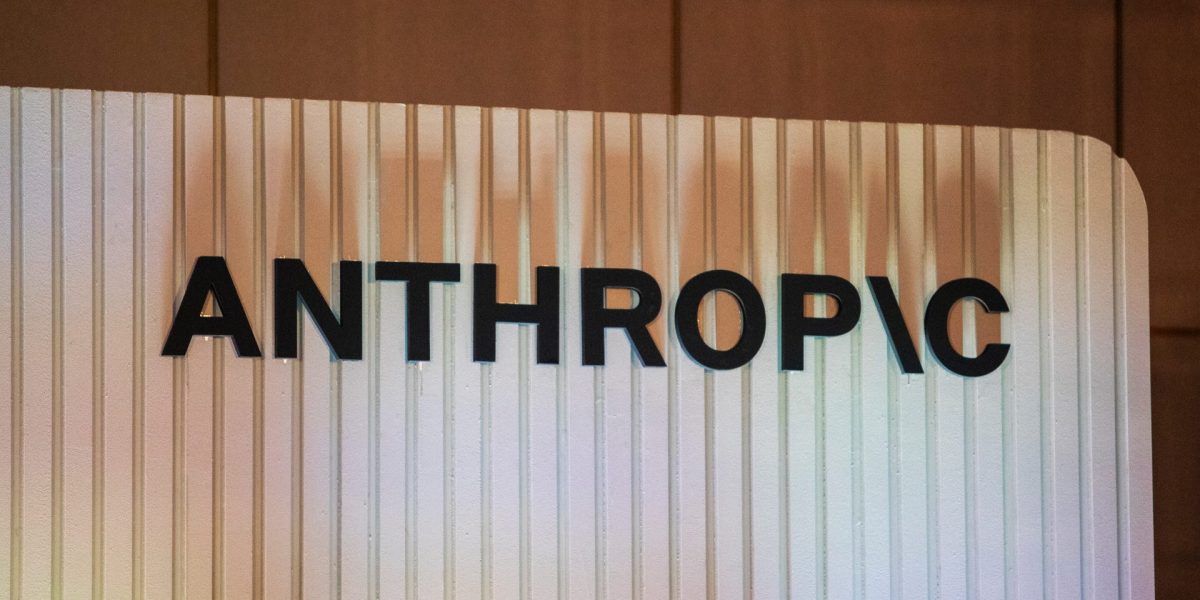
The second story from Fortune this week digs into how the Mythos leak actually happened. The short version: Anthropic’s content management system was configured so that all uploaded assets (blog posts, images, PDFs, internal documents) were public by default, unless explicitly marked private. Nobody did that for nearly 3,000 unpublished assets, leaving them accessible to anyone who knew how to query the data store.
Alexandre Pauwels, a cybersecurity researcher at the University of Cambridge, reviewed the cache at Fortune’s request. Among the exposed material: the Mythos/Capybara model announcement, details of an invite-only CEO retreat in Europe that Dario Amodei is scheduled to attend, and images that appeared to be for internal use including what one document described as an employee’s parental leave materials.
Anthropic attributed the issue to “human error in the CMS configuration” and said it was unrelated to Claude or any AI tools. The company also insisted the exposed material was “early drafts” that didn’t touch core infrastructure, customer data, or security architecture. That is technically accurate, but it misses the point. The issue was not what was exposed; it was that it could be exposed at all.
The Hacker News and X response was more resigned than outraged: “Public-by-default CMS is a rookie mistake for a company handling frontier AI.” Cybersecurity researchers on X pointed to the systemic nature of the problem: AI coding tools like Claude Code can now automate the kind of crawling and pattern detection that found these assets. That significantly lowers the barrier to finding this kind of exposed content in future. Anthropic’s own product may make incidents like this easier to replicate elsewhere.

Separate from the security drama, Anthropic’s engineering blog published a genuinely useful piece on harness design for long-running autonomous applications. Written by Prithvi Rajasekaran from the Labs team, it describes a three-agent architecture (planner, generator, and evaluator) that produced significantly better results on complex coding tasks than a single-agent setup.
The insight draws from Generative Adversarial Networks (GANs): separate the agent doing the work from the agent judging it. The problem with self-evaluation in LLMs is that models are reliably too generous when grading their own output. A standalone evaluator tuned to be skeptical turns out to be far easier to calibrate than making a generator self-critical. Once external feedback exists, the generator has something concrete to iterate against.
The post also covers context resets (clearing the context window entirely and handing off structured state to a fresh agent) as the fix for “context anxiety,” where models prematurely wrap up work as they approach their context limit. The harness addresses two failure modes that anyone building production AI apps will recognise: coherence degradation on long tasks, and self-evaluation that is too lenient to be useful.
This one landed well in the developer community. r/ClaudeAI was energised, with devs already testing the generator/evaluator pattern in their own projects (our guide on building Claude skills covers similar patterns). The standout comment: “This is the missing piece for production-quality AI apps without constant babysitting.” The HN thread noted the GAN inspiration as an elegant conceptual leap, and several engineers pointed out it solves a problem they had been working around with manual prompt hacks. Honestly, this is the kind of post that makes you feel slightly less behind.

Google Research published details of TurboQuant this week, a compression algorithm being presented at ICLR 2026 that reduces LLM key-value cache memory usage by up to 6x, with zero accuracy loss on standard benchmarks. If that claim holds up at scale, it has real infrastructure cost implications.
The technique combines two sub-algorithms. PolarQuant converts vector data into polar coordinates, eliminating the memory overhead that plagues traditional quantization by replacing a moving “square” grid boundary with a fixed “circular” one. QJL (Quantized Johnson-Lindenstrauss) adds a 1-bit error correction layer that removes bias from the attention scores. Together, they achieve high compression ratios without the accuracy degradation that has historically made aggressive quantization impractical for production use.
Testing was done on open-source models (Gemma and Mistral) across standard long-context benchmarks including LongBench and RULER. Early results from the community suggest 4.6x KV cache compression is already being tested on Apple Silicon, which is interesting given Apple’s on-device AI push.
HN and r/MachineLearning reception was positive but measured. The most common thread: “Impressive benchmarks, curious to see real-world deployment.” Some noted this could meaningfully lower inference costs for on-device AI. The academic credibility (ICLR 2026 acceptance) gave it more weight than the average Google blog post, but several engineers were already asking for an open-source release. I genuinely don’t know if that will happen, given Google’s record on this front.

The Verge published a detailed piece this week on how AI has quietly taken over Nashville’s song demo economy. The story focuses on AI replacing the demo process rather than writing complete songs. That’s a less flashy angle, but it’s the more immediate disruption, and it’s already well underway.
Songwriters in Nashville traditionally pay $500–$1,000 per demo to a “track guy” who produces a professional recording to pitch to publishers and artists. A songwriter like Maggie Reaves, who writes around 200 songs a year, could theoretically spend tens of thousands of dollars on demos annually. Now she pays $96/year for near-infinite Suno attempts: she records a voice memo, uploads it, and gets a fully produced demo with drums, electric guitar, bass, and backing harmonies in 30 seconds.
The Verge also reports that even major artists like Dustin Lynch and Jelly Roll are being sent pitches with their voices AI-generated into demos, something AI voice transfer now makes straightforward. Lynch’s manager confirmed this: “What a world we’re moving into.”
The quality is imperfect. Suno outputs have a slightly lo-fi, over-compressed quality that insiders describe as “dated”, but 70% of outputs are solid enough to convey the song’s structure when played in a car. That is enough to replace the demo function entirely for pitching purposes.
Industry insiders on X called AI demos “the dirty secret everyone uses but no one admits.” Reddit music threads were more hostile: “this kills session musicians.” That is not wrong. The demo production economy in Nashville supported hundreds of working musicians. That work is quietly disappearing, and neither labels nor publishers will comment on record. I find that silence more telling than anything else in this story.
Claude Mythos (also referred to internally as Capybara) is Anthropic’s next-generation AI model, described in a leaked draft blog post as the company’s most powerful model to date. It sits above the existing Opus tier and scores significantly higher on coding, reasoning, and cybersecurity benchmarks. Anthropic confirmed the model exists and is in early access testing, but has not announced a general release date. The company is prioritising cybersecurity organisations for early access due to the model’s advanced capabilities in that domain.
Anthropic’s content management system stored all uploaded assets as publicly accessible by default. Nearly 3,000 unpublished assets (including draft blog posts, internal images, and event details) were left unprotected. Anyone with technical knowledge could query the data store and retrieve the files. Anthropic attributed the issue to “human error in the CMS configuration” and secured the data after being contacted by Fortune. The company said AI tools were not involved in the misconfiguration.
TurboQuant reduces the memory required for LLM key-value cache operations by up to 6x, with zero accuracy loss on standard benchmarks. In practical terms, this means the same hardware can handle larger models or more concurrent requests, which directly reduces inference costs. The algorithm is particularly relevant for on-device AI, where memory constraints are tighter. Google presented the research at ICLR 2026, giving it academic validation. Real-world cost savings will depend on deployment context and whether the benchmarks hold outside the test conditions.
Yes, and faster than most public coverage suggests. AI tools like Suno are replacing the demo production process. Not the songwriting itself, but the expensive step of creating a professional-quality demo to pitch to artists and publishers. Multiple Nashville insiders confirmed to The Verge that this practice is now widespread, from entry-level songwriters to established writers with major label connections. The primary economic impact is on session musicians who previously earned income producing demos, a market that is shrinking quickly.
Anthropic had a busy and difficult weekend: a leaked model that validated their capability lead, and a security incident that raised real questions about opsec at frontier labs. The infrastructure stories (TurboQuant, the harness design post) are less dramatic but probably more durable. And the Nashville story is the kind of quiet disruption that tends to matter more in three years than it looks like it does today. More at FridayAIClub.com.
This week, the AI industry moved beyond ambitious claims. OpenAI published machine-checkable proofs, model prices fell, autonomous agents…
Three teams released models above 900 billion parameters in a single week. The interesting question is not the…
GPT-5.6 solves a 50-year math problem. An AI agent raises $100 million. And Congress wants to know who…