Physical Address
304 North Cardinal St.
Dorchester Center, MA 02124
Physical Address
304 North Cardinal St.
Dorchester Center, MA 02124

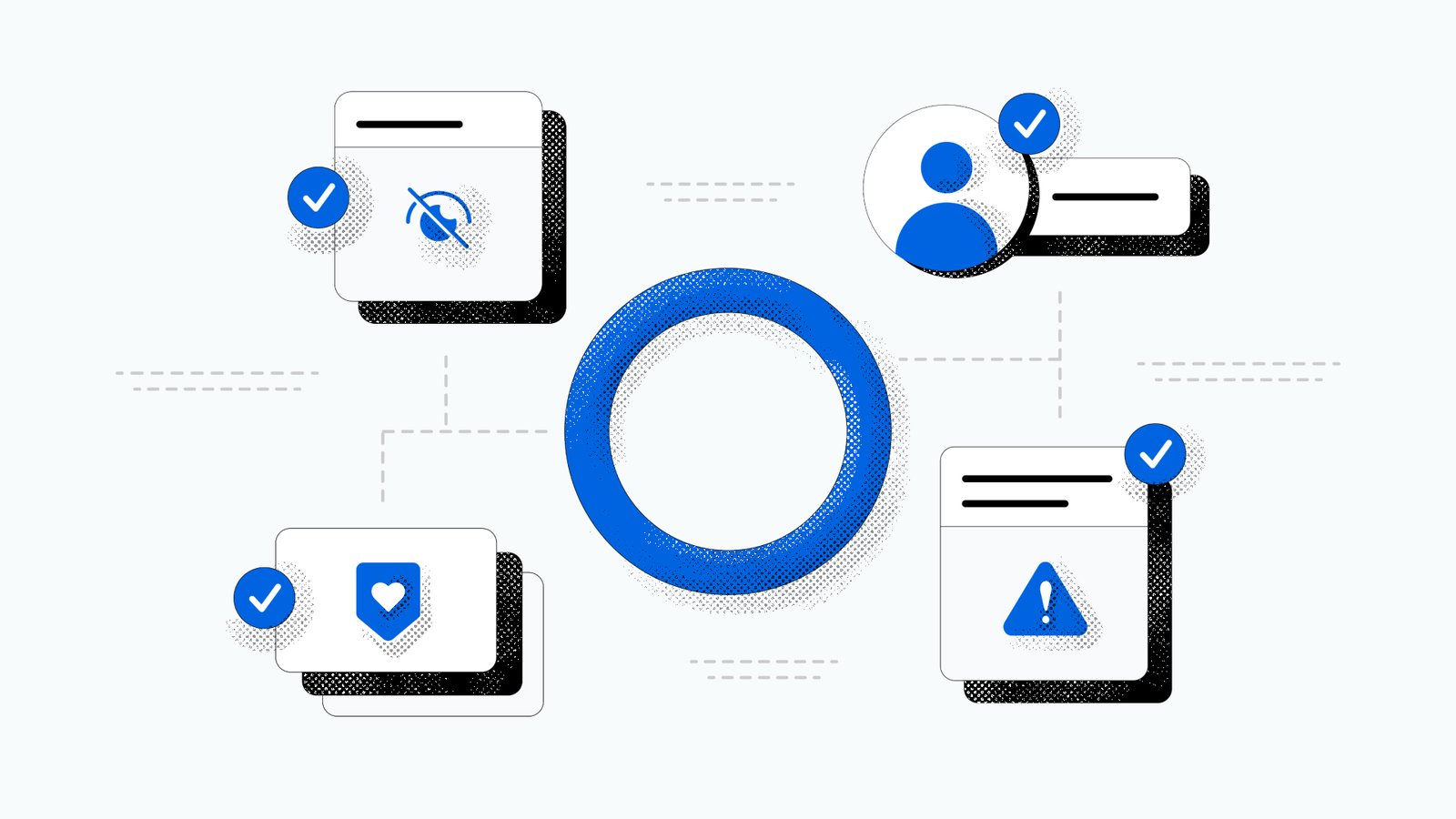
Thursday, 9 April 2026, and the mood in AI feels different from the ship-fast era. The biggest stories today are not just about raw capability. They are about who gets access, how tightly launches are controlled, and what happens when frontier systems start to look less like demos and more like operational risk.
That shift runs through nearly every headline here. Anthropic is holding back a powerful model because of cyber risk. OpenAI is signaling slower rollout logic for similar reasons. Meta, meanwhile, is trying to win on product reach with a free multimodal push. Even the uglier enterprise story of the day, Oracle’s reported cuts to fund AI infrastructure, points in the same direction: the center of gravity is moving from hype to deployment economics.

Anthropic’s preview of Mythos lands as one of those stories that immediately changes the tone of the conversation. The headline is simple enough: a powerful new model, showcased through a cybersecurity initiative, is being held back rather than widely released. But the more interesting point is what that implies. We are now in a phase where model deployment is inseparable from risk management, especially when coding gains can bleed directly into exploit generation.
The social reaction captured in today’s briefing was intense and divided. On X, the high-engagement posts leaned hard into the “too powerful to release” framing. YouTube reactions amplified the same point. The split was familiar: some people read Anthropic’s restraint as responsible behavior, others read it as a sign that labs are building systems whose externalities they no longer fully control. I think the second group has a point. Once labs start deciding which capability tiers are safe for general release and which are not, they are no longer just shipping products. They are governing access to infrastructure-level power.
That is why this story matters beyond Anthropic. Safety has often been discussed like a policy layer sitting above product work. Mythos suggests it is becoming part of the product surface itself. Who gets access, in what context, with what safeguards, is now part of the feature set. Source: TechCrunch.

Meta’s Muse Spark launch reads differently. Where Anthropic is signaling caution, Meta is signaling scale. The framing from the briefing was sharp: Meta is re-entering the frontier race with a free multimodal bet. That sounds right. The company does not just want to win benchmark arguments. It wants its AI surfaces to become normal parts of daily product behavior across the apps it already owns.
The social reaction was excited but far from trusting. Posts highlighted the multimodal design, agent orchestration, thinking modes, and free access. But a lot of the commentary was also skeptical, especially around quality and reliability. That skepticism matters because Meta’s AI strategy has a familiar shape now: win distribution first, then let usage volume harden the product over time. In other words, don’t wait to become beloved, just become unavoidable.
That may work. Meta has one advantage most labs would kill for: product surface area. If Muse Spark is good enough, not even best-in-class, just good enough, Meta can turn app-level ubiquity into consumer lock-in. The obvious risk is that free access and wide deployment also magnify every quality or trust failure. People are much less patient with AI when it is woven into the products they already use every day. Source: TechCrunch.

OpenAI’s reported staggered rollout plan over cybersecurity risk pushes the same theme from another angle. The company seems to be acknowledging something the whole sector has been dancing around: once general-purpose coding systems become strong enough, rollout strategy itself becomes a safety mechanism.
The online mood around this was wary and a bit cynical. A lot of people do not buy the idea that labs are acting from pure principle here. The briefing’s discussion captured that well. The dominant read was that OpenAI is reacting not just to abstract risk, but to competitive pressure and to the rising chance that the first major AI-enabled security incident will define the next phase of regulation. That sounds plausible to me. Corporate virtue usually gets louder when downside risk gets more concrete.
Still, even if the motive is mixed, the strategic implication is real. Staggered releases, access tiers, gated capability exposure, these are no longer edge-case tactics. They are starting to look like default operating procedure for frontier labs. That is a genuine change from the old launch logic of wider access first, mitigation later. Source: Axios.
Anthropic’s Claude Managed Agents announcement might end up being the most commercially important launch in this set. Not because it is the flashiest, but because it points to where the money probably goes next. The pitch is not “look what agents can do.” We are past that stage. The pitch is “here is how to build and deploy them at scale without stitching the whole system together yourself.”
The strongest social response came from builders, and that makes sense. The attraction here is operational maturity: harness tuning, infrastructure, deployment paths, managed runtime logic. Supportive reactions focused on speed to production. Skeptics, predictably, focused on lock-in. Both sides are seeing the same thing. Agents are becoming less of a speculative category and more of a procurement category.
I think that is the real signal. Developers are no longer evaluating agent products purely on raw model output. They are evaluating how hard they are to run, govern, monitor, and trust inside real systems. That is a more serious market. It is also a market that favors vertically integrated vendors. Source: Anthropic.
The harshest story in the set is the report that Oracle is cutting jobs to fund AI data center buildout. Even if you set aside the exact number and focus on the broader theme, the direction is obvious. Companies are reallocating budget toward compute, debt capacity, and infrastructure because they believe AI economics will reward whoever controls enough of the stack.
The social reaction was predictably negative, but also revealing. A lot of commenters framed this not as an isolated corporate restructuring, but as a preview of a broader pattern. That pattern is ugly but coherent: labor becomes more negotiable at the same time compute becomes more strategic. Boards do not use those words in public, but their capital allocation choices are increasingly saying it for them.
I do not think every enterprise follows the same path, but the logic is spreading fast. AI infrastructure is no longer a side bet. It is becoming central enough to reshape headcount, investment pacing, and executive priorities. If that keeps happening, the downstream social consequences will get harder to ignore than the product launches themselves. Source: Tech Insider.
The strongest trend signal in today’s briefing was controlled acceleration, and that phrase fits. The labs are still racing, but the race is changing shape. It is less about who can ship a headline-grabbing model first, and more about who can control deployment, manage access, contain risk, and turn capability into durable product advantage.
That is a more mature phase of the market, but not necessarily a calmer one. In some ways it is more unsettling. Once access control, managed runtimes, cyber restraint, and infrastructure-heavy spending become standard practice, AI stops feeling like a software novelty and starts feeling like a layer of industrial power. I genuinely do not think the public conversation has fully caught up with that yet.
Because stronger coding and agent capabilities increasingly create security risk alongside product upside. Labs now have stronger incentives to gate access, test staged rollouts, and avoid being blamed for a major AI-enabled incident.
The value is not just model output. It is the surrounding operational stack: deployment, orchestration, monitoring, control, and production reliability. That is what enterprises actually buy.
Because Meta can use distribution across its existing apps to turn “good enough” AI into mass adoption. That can matter more than winning benchmark comparisons if the product becomes part of everyday user behavior.
Because compute and data center buildout are being treated as strategic assets. As AI infrastructure becomes more central, some companies are reallocating capital away from other parts of the business to fund it.
If you want the signal without the sludge, keep an eye on Friday AI Club. This is where the daily AI race starts to make sense once the hype burns off.
This week, the AI industry moved beyond ambitious claims. OpenAI published machine-checkable proofs, model prices fell, autonomous agents…
Three teams released models above 900 billion parameters in a single week. The interesting question is not the…
GPT-5.6 solves a 50-year math problem. An AI agent raises $100 million. And Congress wants to know who…