Physical Address
304 North Cardinal St.
Dorchester Center, MA 02124
Physical Address
304 North Cardinal St.
Dorchester Center, MA 02124

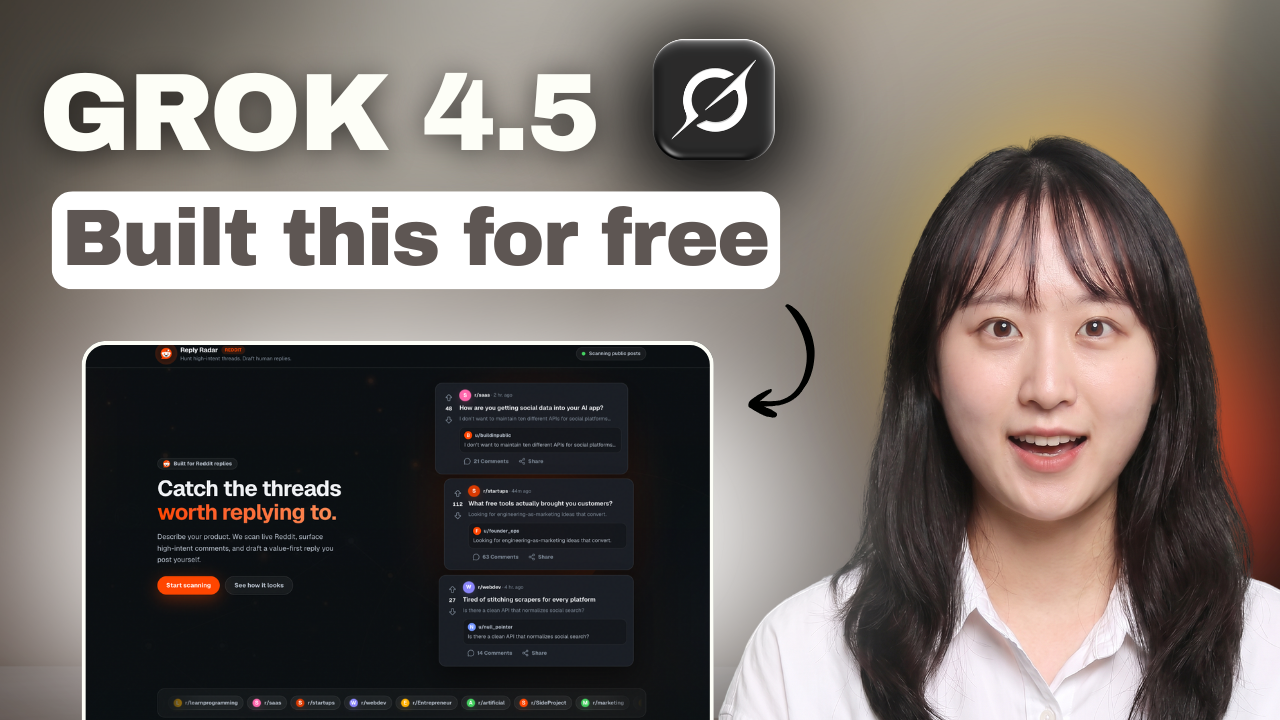
Grok 4.5 might be the first frontier coding model that feels fast enough for everyday work without feeling painfully expensive. But speed and benchmark scores don’t tell you whether you should trust it with a real build.
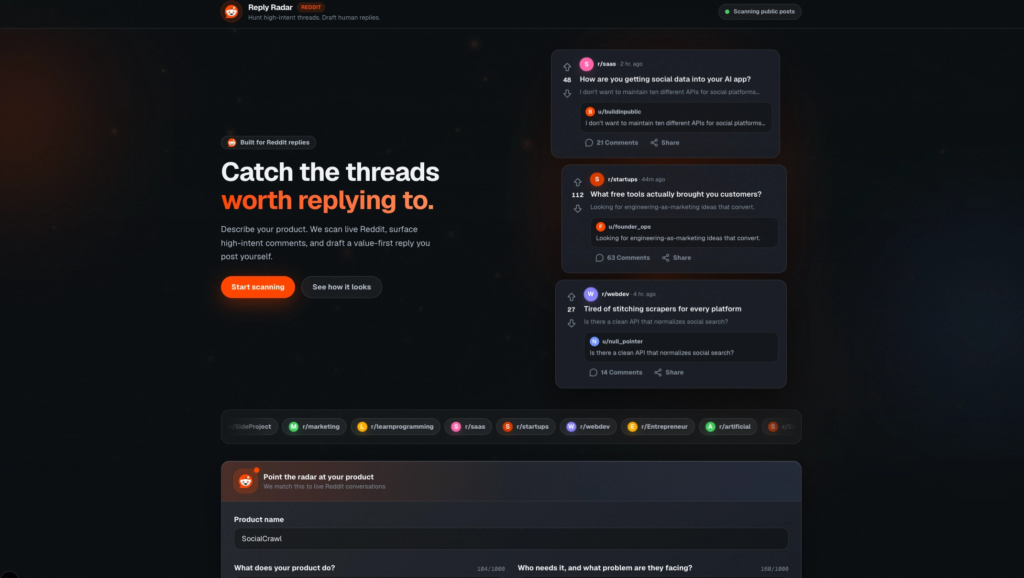
So I tested it on something practical: building a Reddit research app from scratch with one massive prompt. My short verdict from this Grok 4.5 coding review is that it’s excellent for fast execution, but it still needs a human to check whether the hardest parts actually work.
This article is for builders who want a simple answer before changing their coding workflow. I’ll cover speed, prompt execution, bugs, cost, and the one fallback that changed my verdict.
SpaceXAI built Grok 4.5 for coding, agent tasks, and knowledge work. It says the model was trained alongside Cursor using tens of thousands of NVIDIA GB300 graphics processors and reinforcement learning across hundreds of thousands of technical tasks.
The collaboration followed Cursor’s partnership with SpaceXAI to scale its model training. That gives Grok 4.5 a closer connection to real coding-agent work than a generic chat model.
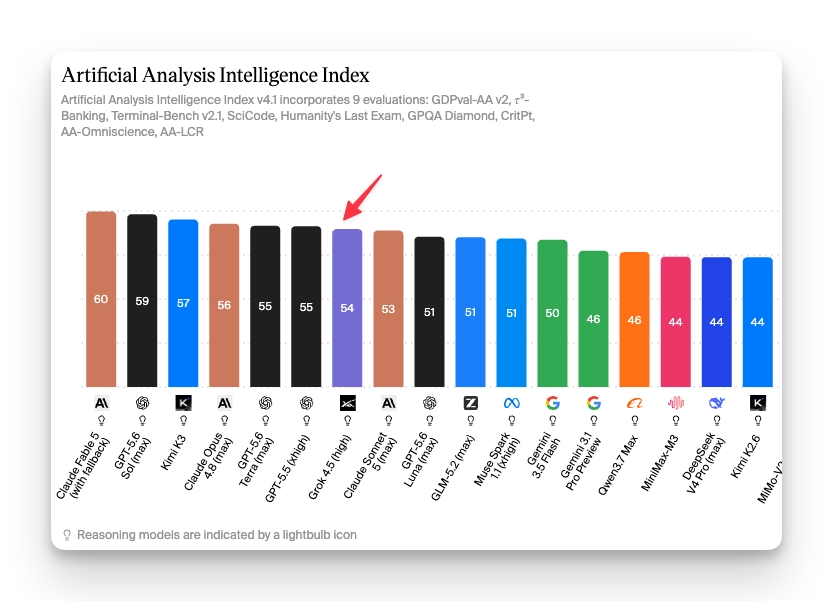
Also currently Grok 4.5 sits at the 6th place on the Artificial Analysis Intelligence Index and claims to be a ‘near-Opus’ model.
Here are the main figures published by SpaceXAI:
| Metric | Published Grok 4.5 figure |
|---|---|
| Serving speed | 80 tokens per second |
| Context window | 500,000 tokens |
| API input price | $2 per 1 million tokens |
| API output price | $6 per 1 million tokens |
| DeepSWE 1.0 | 62.0% |
| Terminal Bench 2.1 | 83.3% |
| SWE Bench Pro | 64.7% |
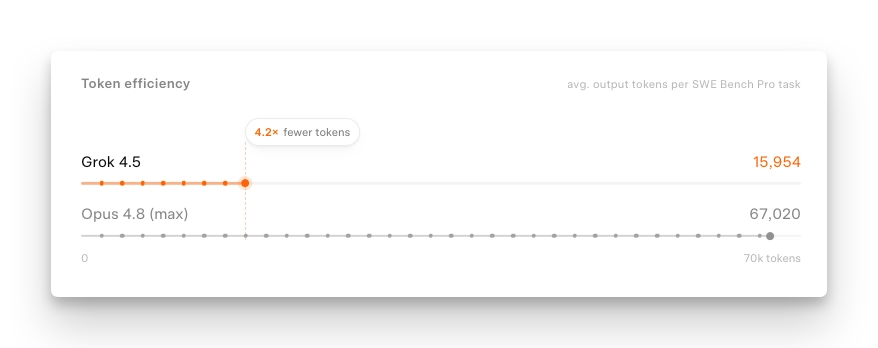
SpaceXAI also reports that Grok 4.5 used 15,954 output tokens per SWE Bench Pro task on average. That was about 4.2 times fewer than the 67,020 tokens reported for Claude Opus 4.8 in the same comparison.
These are vendor-published results, not a promise about your project. You can review the full charts in the Grok 4.5 launch announcement and the live specifications on the official Grok 4.5 model page.
I wanted something more useful than another landing page. So I asked it to build Reddit Reply Radar.
The app needed to find relevant live Reddit posts, rank the best conversations, and draft a response I could review before posting.
I gave Grok 4.5 three things:
reddit-reply-radar-public-build-brief.md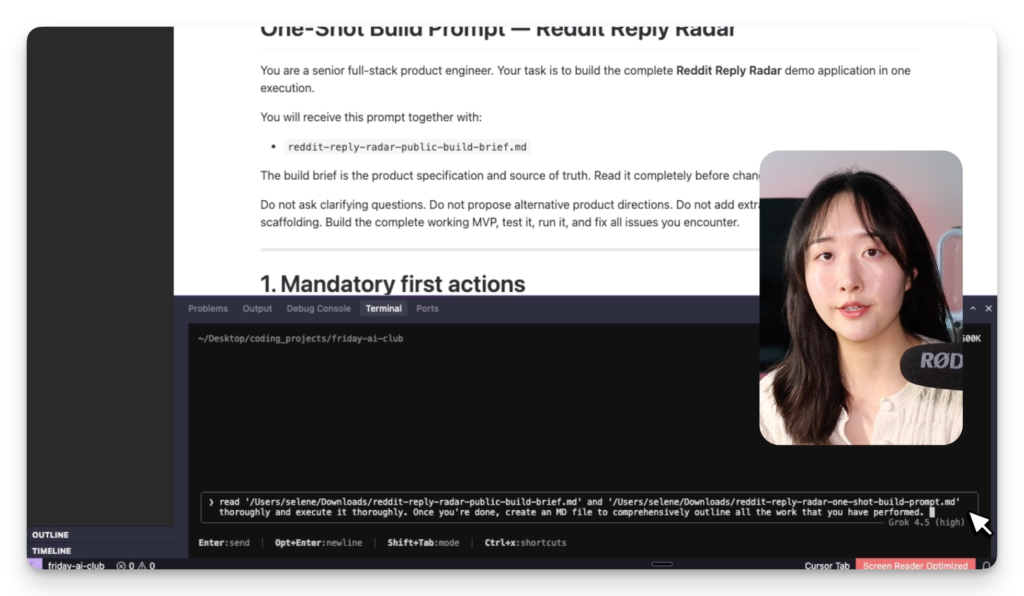
📌 The product brief and prompt files are available to download here
👉 https://ridio-io.notion.site/grok-test-files
I set the model to its highest effort level and told it to treat the brief as the source of truth. This was a one-shot test, so I didn’t correct it during the build.
Grok finished in 27 minutes and 37 seconds. That was faster than I expected for a full app built from a detailed brief.

The layout, screens, and main workflow looked surprisingly complete. Then I tested the part that mattered most: pulling live Reddit data.
| Test area | What happened | Verdict |
|---|---|---|
| Speed | Finished in 27:37 | Excellent |
| Prompt execution | Built the main interface and workflow | Strong |
| Reliability | Nothing broke, all features functional | Strong |
| Design | Blend, minimal design | Weak |
| Direct test cost | $0 during limited free access | Good, but temporary |
| Proactivity | Focus on getting tasks finished fast, less proactive | Lazy |
SpaceXAI was offering limited free Grok 4.5 usage in Grok Build and Cursor when I ran the test. That made my direct bill $0.
The API list price is still useful for comparison: $2 per million input tokens and $6 per million output tokens. I didn’t capture a complete token log, so any exact API-equivalent cost for this build would be guesswork.
Overall, the output Grok 4.5 produced is impressive considering it was a one-shot output, that took only 27 minutes and got every button working in the first try.
When Grok is given clear instructions, it seems like it goes off and does the job exactly by ticking the boxes.
Whether Grok 4.5 is near Opus level is yet questionable. Grok 4.5 is definitely not as proactive as Opus and pays attention to details. It sometimes feel lazy and misses the larger picture compared to Opus.
However, for handling daily coding tasks, de-bugging, small-to-medium tasks, Grok 4.5 would be an optimal choice.
For instance, the prompt had clear guide on the UIUX of the app. Grok 4.5 did the minimal job but still following the instructions. As a result, the interface seemed boring and unexciting. Meaning, it’s not a quality that I would actually launch.
To improve the interface, I used 2 skills:
I asked Grok 4.5 to use these 2 skills and be creative with the interface, using more of Reddit brand components so that it’s visually obvious that this is an Reddit related app.
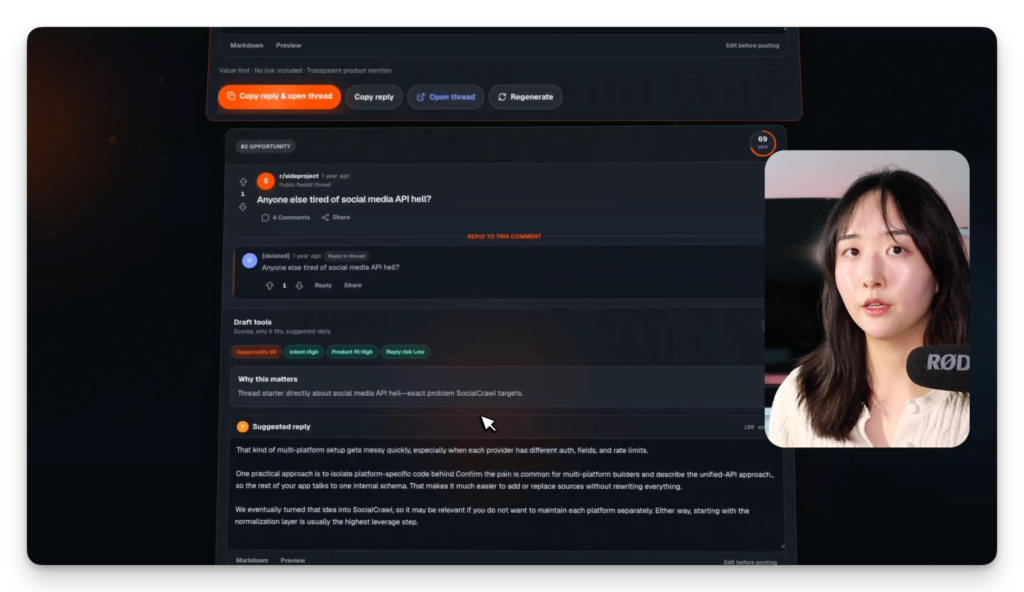
This was the output after the first design iteration and it has improved significantly.
The current model already has a 500,000-token context window. In plain English, that gives it room to work with large specifications and substantial codebases in one conversation.
Long context only gives the model more information to work with. It doesn’t guarantee that every integration is connected.
One fact-checking note: I couldn’t confirm the transcript’s planned 1-million-token upgrade or a 2-trillion-parameter successor in current official sources. The official model page still lists 500,000 tokens, so I wouldn’t publish those future claims as facts yet.
For rapid prototypes, debugging, and everyday pair programming, Grok 4.5 is easy to recommend trying. It feels fast and follows a detailed brief well.
I wouldn’t make it a hands-off shipping system. For architecture decisions, risky migrations, and final integration checks, I’d still use a stronger review step and test the real workflow myself.
My practical setup would be:
Grok 4.5 felt much faster than my recent GPT-5.6 Sol test. However, one project still isn’t enough to declare a universal winner.
👉 Claude Design Tutorial: Build A Social Media Dashboard
👉 How to Give Claude Code Social Media data
👉 Claude Code Tutorial for Beginners – Setup Guide
Most people still think about social media data in terms of posts, likes and follower counts. But a…
Choosing the best AI coding model can feel like comparing four pages of benchmarks written in four different…
If you've been trying to decide between Claude Code vs Codex, you've probably run into the same wall…





[…] 👉 Grok 4.5 Coding Review: Fast, Cheap, but Lazy […]
[…] 👉 Grok 4.5 Coding Review: Fast, Cheap, but Lazy […]