Physical Address
304 North Cardinal St.
Dorchester Center, MA 02124
Physical Address
304 North Cardinal St.
Dorchester Center, MA 02124


If you’ve been trying to decide between Claude Code vs Codex, you’ve probably run into the same wall I did.
Everyone online has a strong opinion, but almost nobody has actually made both tools build the exact same thing and tracked what it cost.
So I stopped reading the arguments and ran the test myself.
✅ I gave both tools one design file and one job: scrape the top-performing Instagram Reels for a hashtag and turn them into a live dashboard.
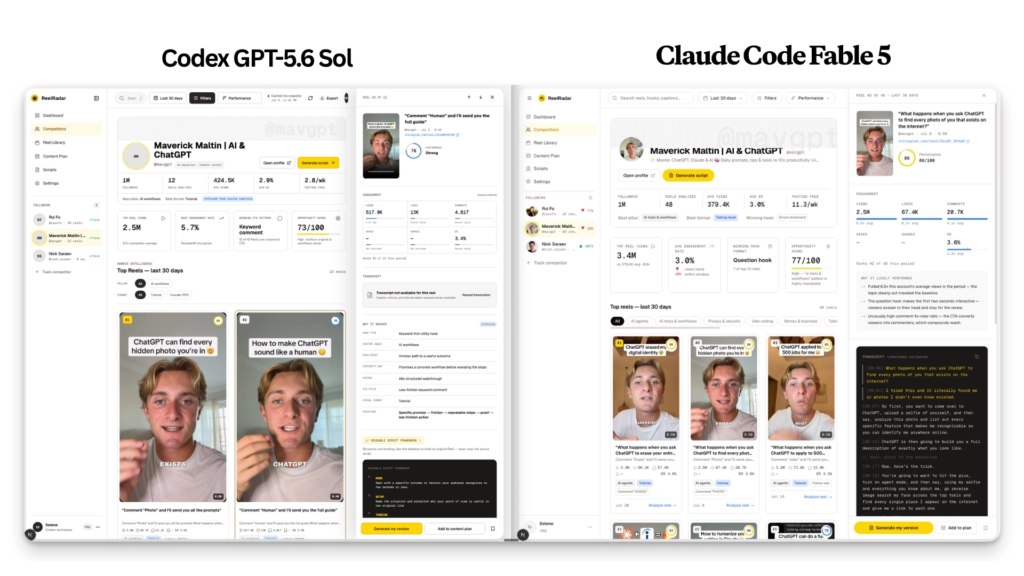
Same prompts and design file to keep everything consistent. And I wrote down every token, every minute, and every dollar they burned through.
By the end you’ll know which one actually deserves your money, and the result surprised me. One of them finished on half the tokens of the other, but it wasn’t the one that built the better dashboard.
If you’ve never touched either one, here’s the quick summary.
Claude Code and Codex are both AI coding agents. Instead of living in a chat window, they run in your terminal and can read and write across your whole project. You tell them what you want in plain English, and they build it for you by creating files, editing code, and running commands.
Each tool is only as good as the model driving it. For this test, Claude Code was running Claude Fable 5, Anthropic’s newest model, and Codex was running GPT-5.6 Sol, OpenAI’s newest.
📌 So underneath the Claude Code vs Codex question, this is really Fable 5 against GPT-5.6 Sol.
A comparison only means something if both sides get the same shot, so I locked everything down.
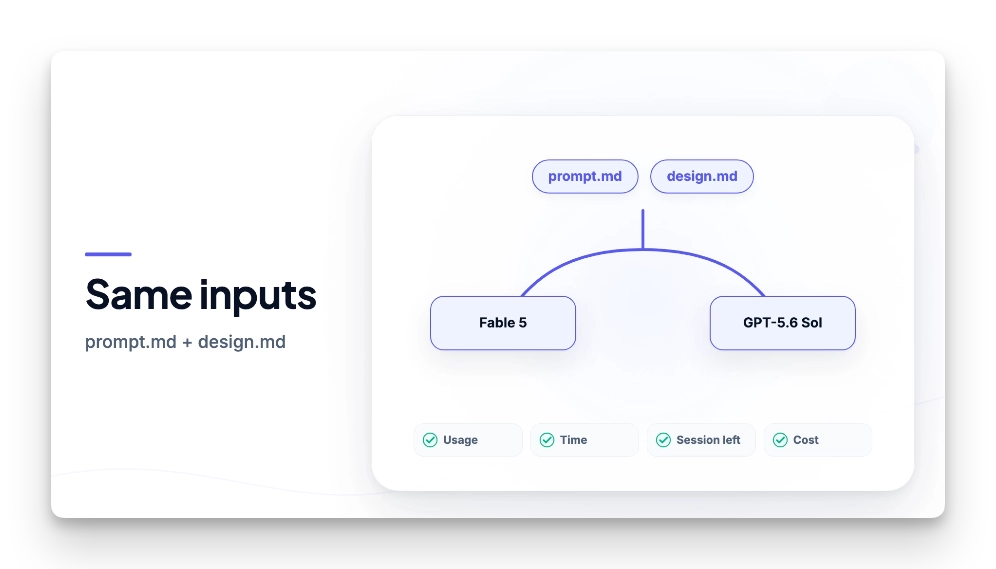
✅ Both tools got the same prompt, the same design file, and the same three steps. Each one had to brainstorm first, then plan, then build. No rushing one and babying the other. For each tool I tracked four numbers: tokens used, time taken, usage left afterward, and the real dollar cost.
✅ The job was identical for both. Build a dashboard that scrapes the top-performing, high-engagement Reels for a specific Instagram hashtag and lays them out so you can see what’s working.
Before the head-to-head, I did two things behind the scenes so both tools started from the same place. Both are linked below if you want to copy them.
1️⃣ First, the design. I didn’t want either tool inventing its own look, because that would make the whole test messy. So I used Claude Design to generate a wireframe and turned it into a design.md file.
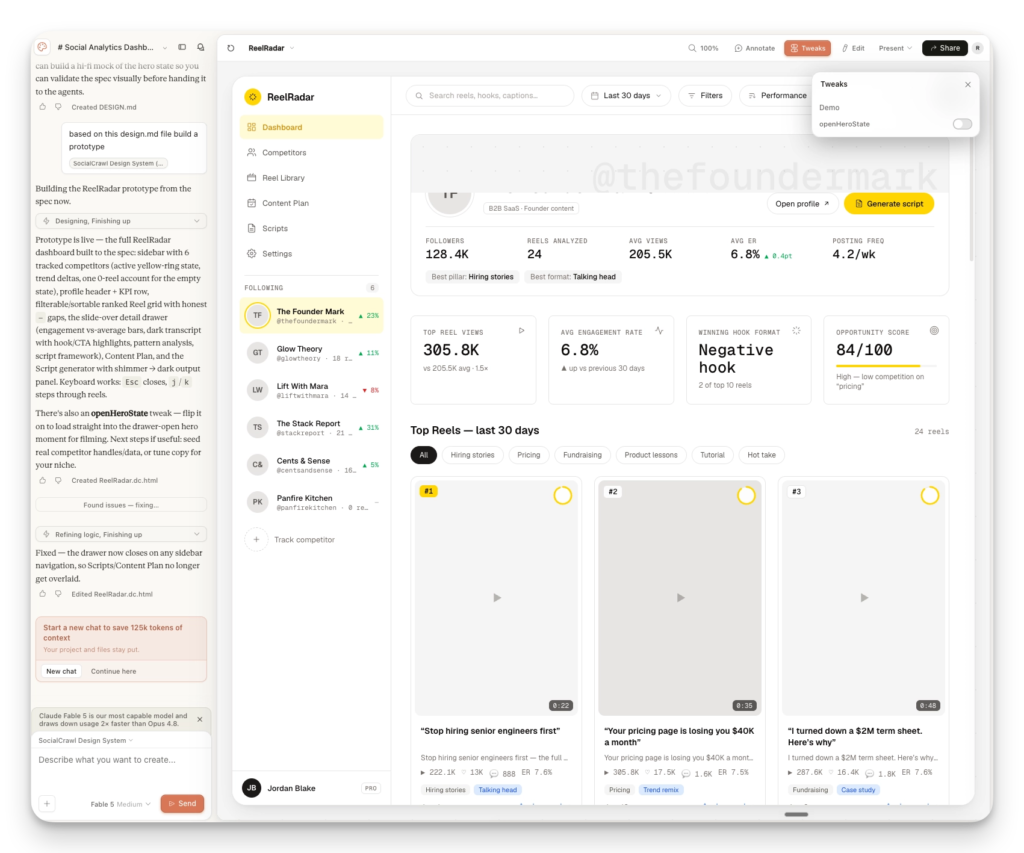
If that sounds intimidating, it’s just a plain text file that describes what the app should look like. The layout, the sections, the general feel. Think of it as the blueprint you hand a builder before anyone pours concrete. Both tools got the identical blueprint.
2️⃣ Second, the prompt. I didn’t want to accidentally write two slightly different prompts and hand one tool an advantage. So I brain-dumped everything I wanted the dashboard to do, gave that plus the design file to ChatGPT, and asked it to write one clean, detailed prompt. That single prompt is what both tools received, word for word.
One last piece before the builds, and it’s the part that actually pulls the Instagram data. Neither tool can scrape Reels on its own, so I gave both the same helper: SocialCrawl, a single API that pulls live data from a range of social platforms, Instagram included.
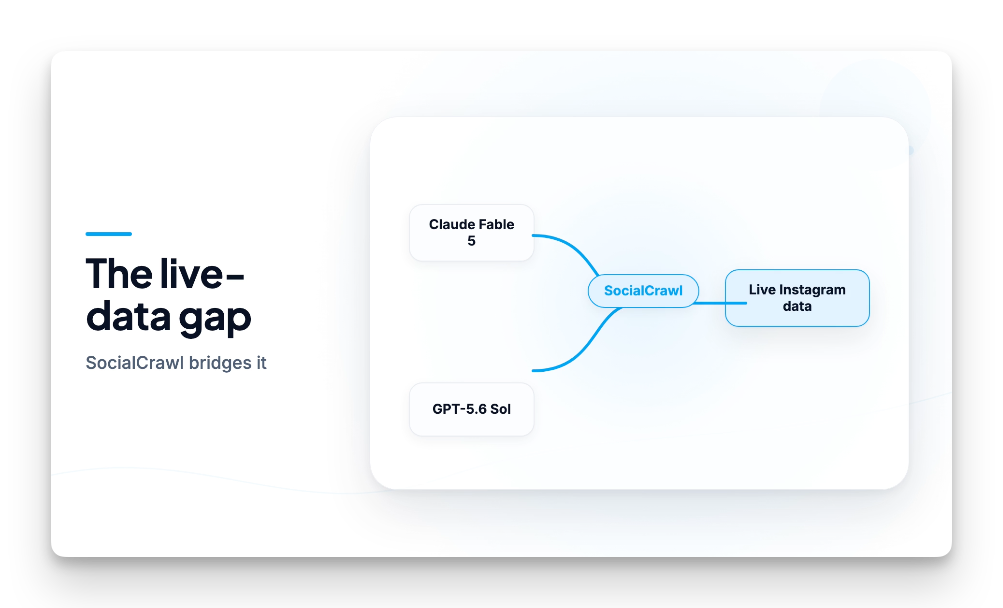
Adding it to Claude Code takes about a minute. You run one line to install it, grab your API key from your SocialCrawl dashboard, and paste it in when it asks.
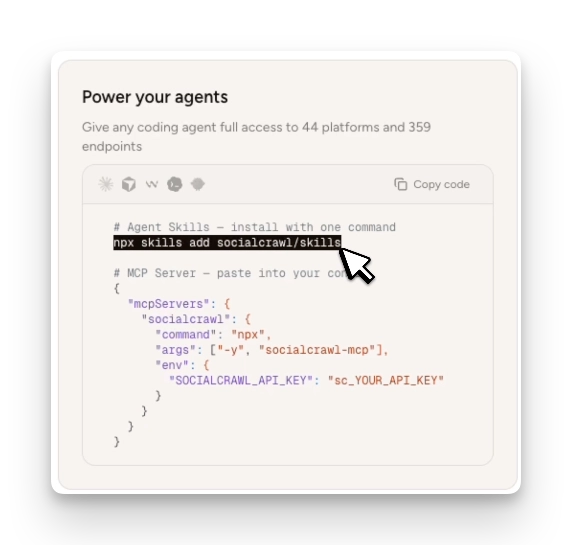
Every account starts with a hundred free credits, so you can follow along without paying anything. I ran one tiny test call to confirm it was working, and the data came back. Same setup went into Codex too, so both tools pulled from the identical source.
First up was Claude Code running Fable. I marked my token count going in, then dropped in the design file and the prompt and let it work through all three phases.
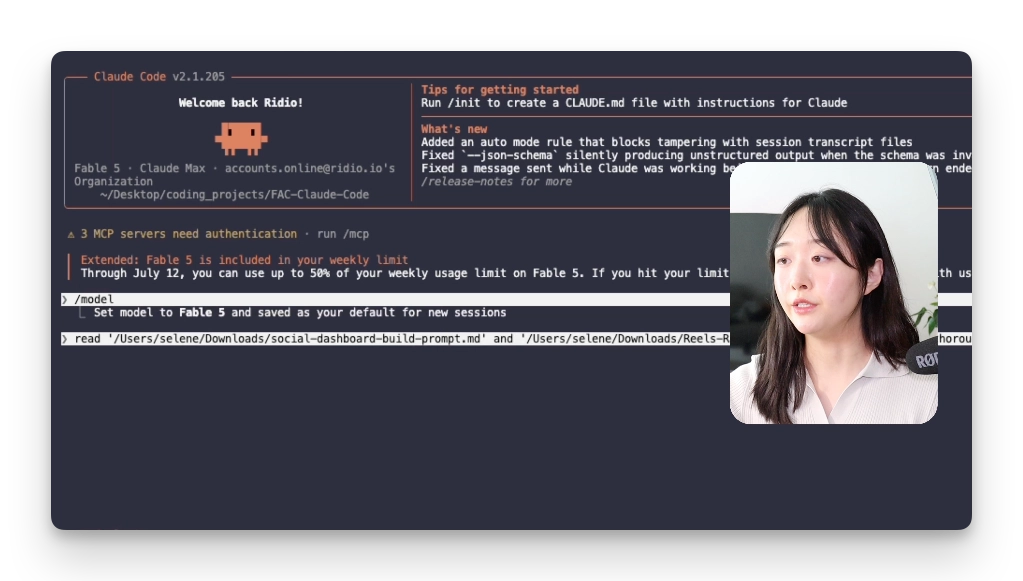
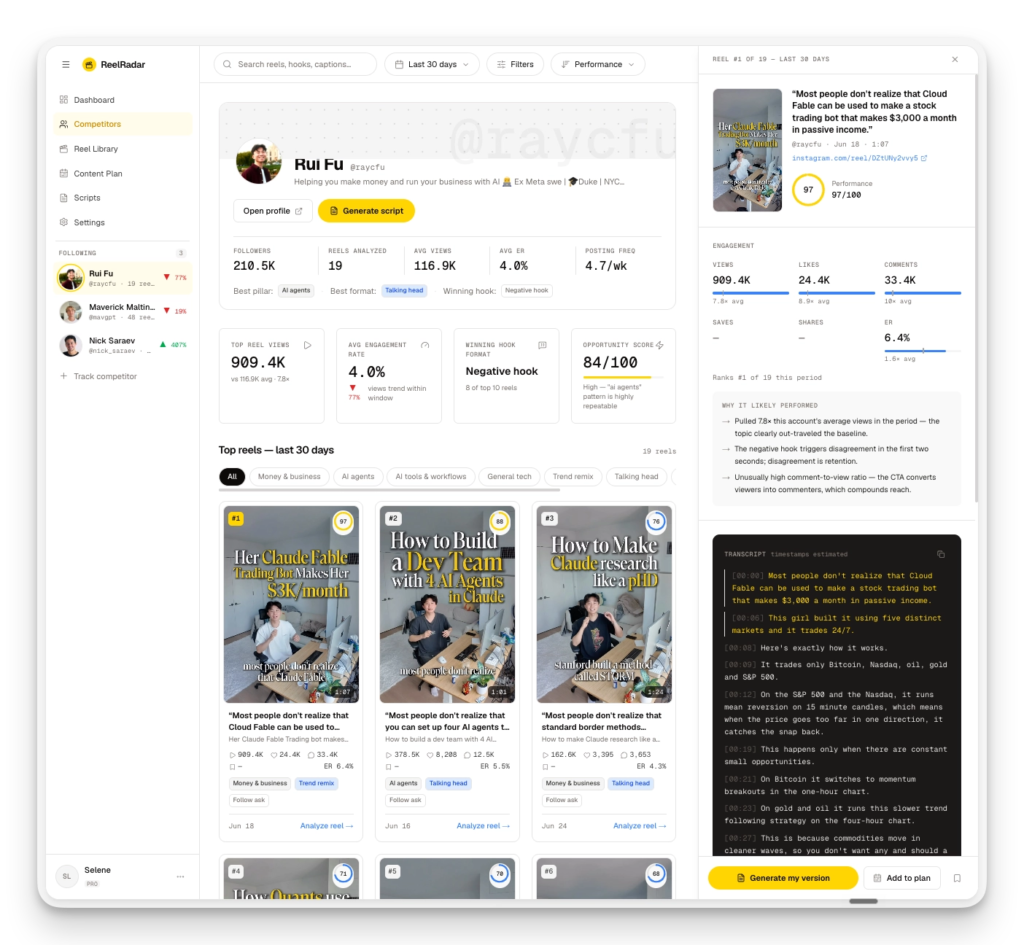
✅ What it did well:
❌ Where it fell short:
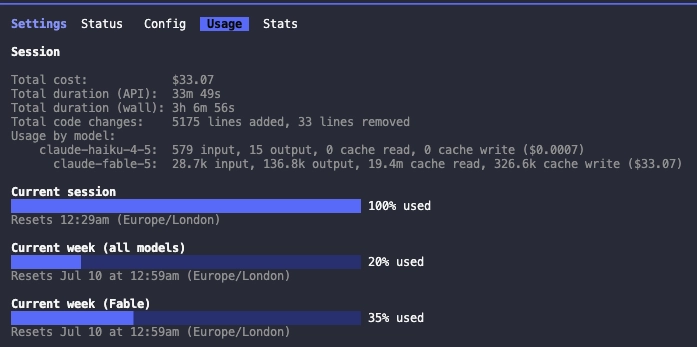
Here’s the scorecard:
Same everything for Codex. Same design file, same prompt, same SocialCrawl connection.
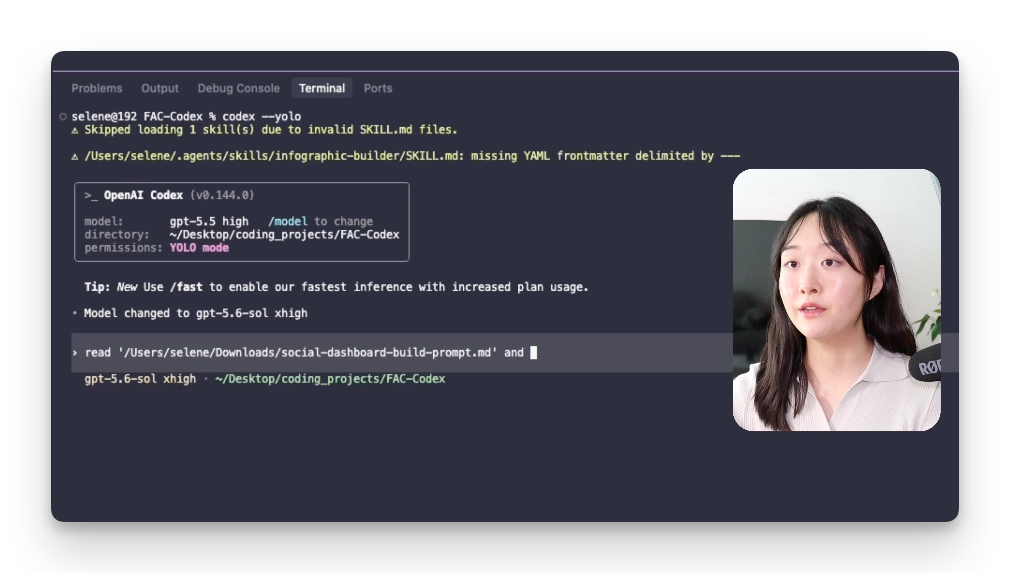
✅ What it did well:
❌ Where it fell short:
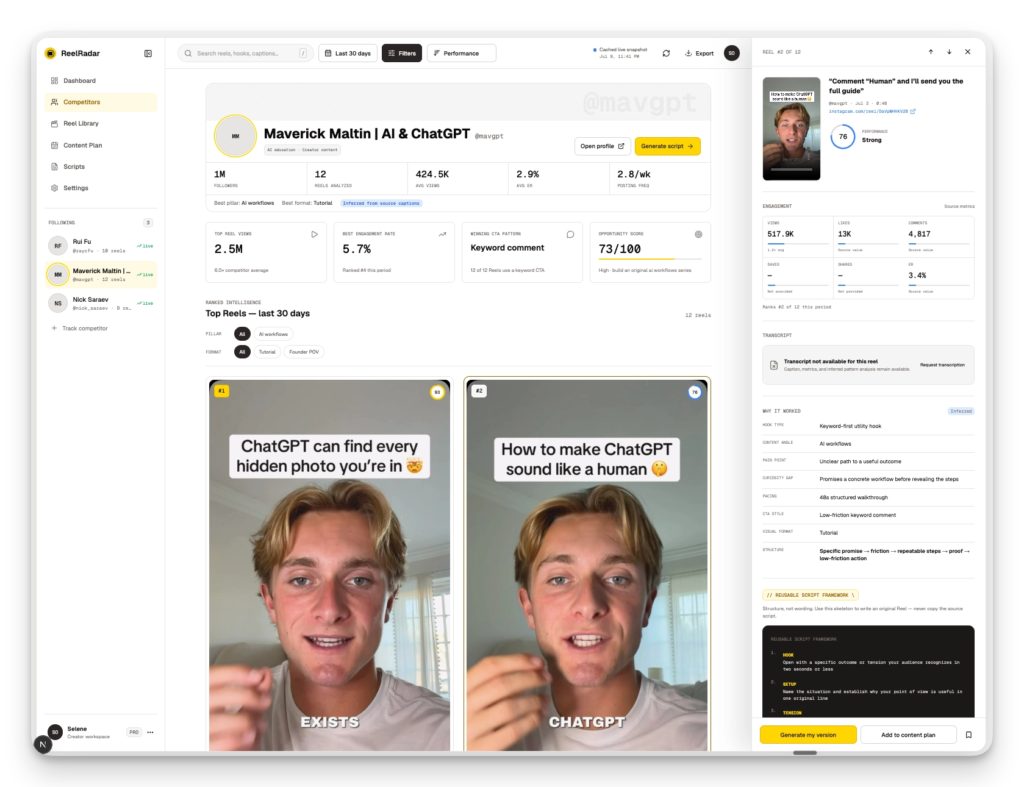
Here’s Codex’s scorecard:
With both builds done, I put them next to each other. Same data, same brief.
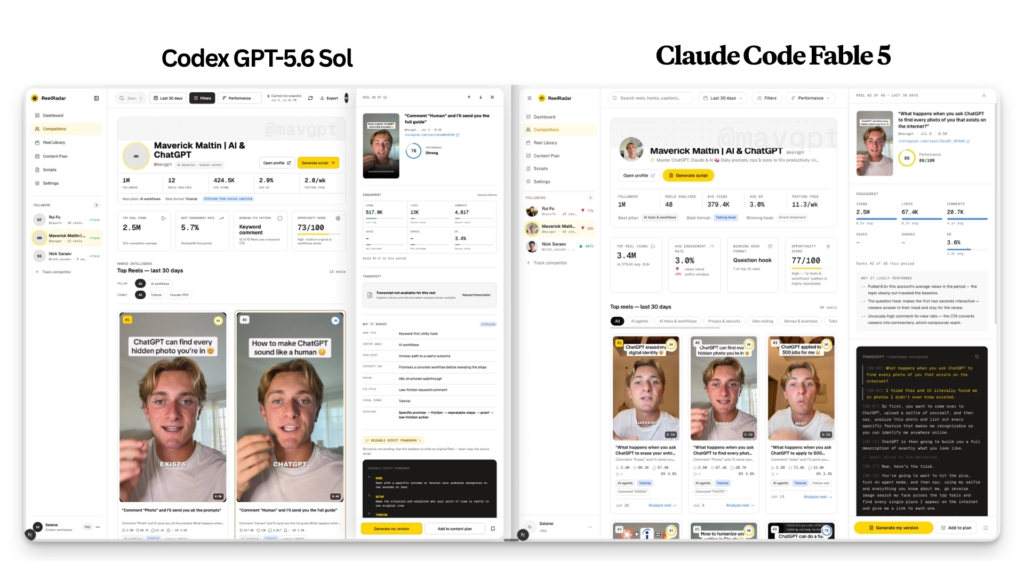
Here’s how it turned out:
| 📝 Dashboard | Claude Code (Fable 5) | Codex (GPT-5.6) |
|---|---|---|
| Overall quality | High | High-mid |
| Attention to detail | High | Mid |
| Followed instructions | Very well, even proactive | Good |
| Design (UI/UX) | Minor UIUX errors | Minor UIUX errors |
| Functionality | Good (no major errors) | Good (no major errors) |
| Ready to ship | Need to work on details and design errors | Need to work on details and design errors |
| 📊 Stats | Claude Code (Fable 5) | Codex (GPT-5.6) |
|---|---|---|
| Tokens used | 20% of weekly limit | 2% of weekly limit |
| Time taken | 33 minutes | 39 minutes |
| Usage left | Current session 0% | Current session 87% |
| Cost | $33 | $12 |
It comes down to what you care about, and if you’re a small team watching every dollar, this matters.
If cost is the thing keeping you up at night, Codex GPT-5.6 came in noticeably cheaper for the same job, and for a lot of everyday builds that’s the smart pick. If you’d rather get something you can ship without cleaning it up afterward, Claude Code Fable 5 gave the better result, and that saved time is worth real money too.
And if you’re just getting started, don’t overthink it. Pick one, build one real thing with it, and judge it on your own work. Either way, you now know what you’re actually paying for with Claude Code vs Codex. Go build something.
👉 Claude Design Tutorial: Build A Social Media Dashboard
👉 How to Give Claude Code Social Media data
👉 Claude Code Tutorial for Beginners – Setup Guide
Most people still think about social media data in terms of posts, likes and follower counts. But a…
6 best Claude design skills for landing pages Ask an AI coding agent for a SaaS landing page…
Choosing the best AI coding model can feel like comparing four pages of benchmarks written in four different…