Physical Address
304 North Cardinal St.
Dorchester Center, MA 02124
Physical Address
304 North Cardinal St.
Dorchester Center, MA 02124

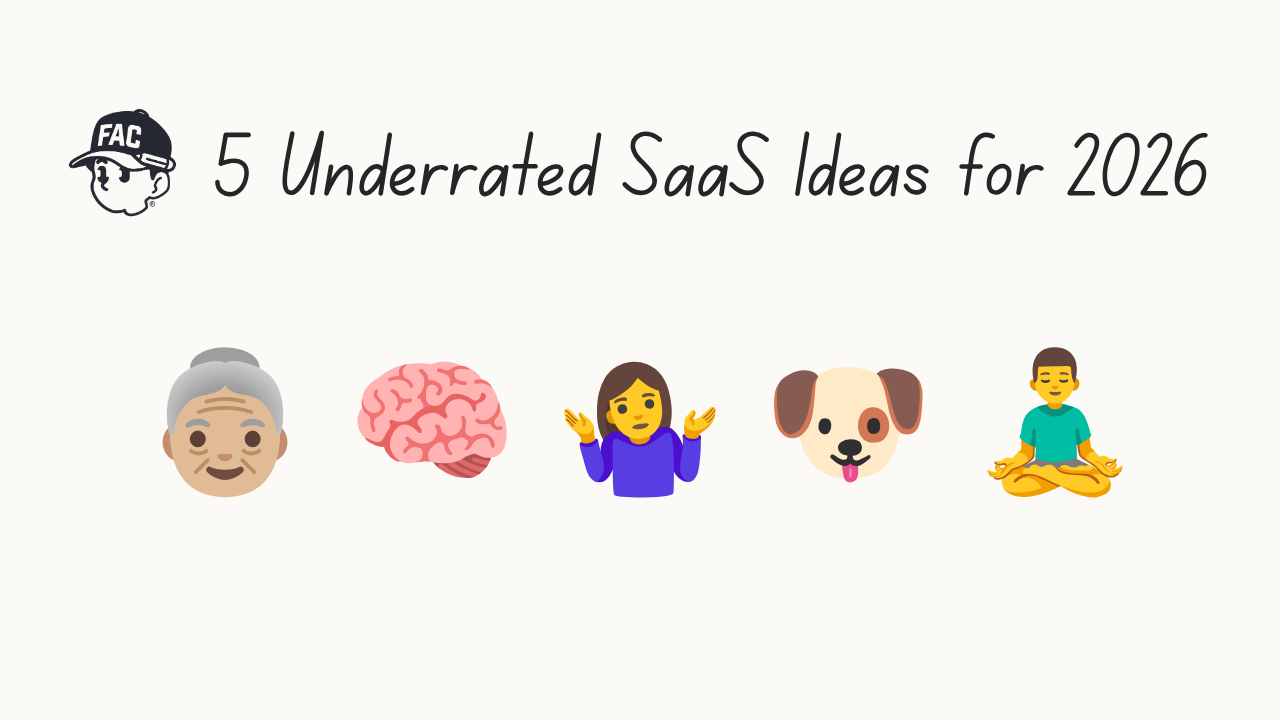
Every “app ideas” list recycles the same five: an AI chatbot, a habit tracker, a budgeting app, a meal planner, an AI wrapper for something. So I did the opposite of guessing. I pulled live demand and supply data from 42 social platforms and went hunting for the gaps 👉 niches where people are clearly paying for a solution but nobody has shipped the app.
The pattern that fell out explains why these ideas stay hidden: builders crowd where builders hang out. On X, the indie-hacker timeline is wall-to-wall ChatGPT wrappers and dev tools. Meanwhile the loudest consumer pain goes completely unanswered, because the demand is emotionally coded, demographically specific, or just unglamorous. And in every case the tell was the same: money is already moving, but not toward apps. It flows to doctors, supplement brands, vets, and creators selling PDFs. A validated market with no software incumbent is the best setup a solo developer can ask for.
How I found these. I ran roughly 400 live queries across Reddit, TikTok, YouTube, Instagram, Threads, Pinterest, Facebook’s ad library, and link-in-bio pages through a single social-data API (SocialCrawl).
📌 Demand = what people beg for in comments.
📌 Supply = how many real apps actually advertise against it.
📌 Blue ocean = high demand, near-zero supply.
Every number below is pulled, not estimated.
| App idea | Demand signal | Supply | Best for |
|---|---|---|---|
| Eldercare coordination | Threads post: 28K likes, 4.4K comments | 0 app-install ads on Facebook | The “sandwich generation” |
| ADHD anti-churn tools | YouTube comment: 6,700 likes | 0 app-install ads; money goes to coaches | Adults with ADHD |
| Perimenopause navigator | “Am I dying or perimenopause?”: 8,801 likes | “menopause app” = 0 search results | Women 35–55 |
| Pet-health triage | Senior-dog content: 7–12% engagement | 3 total ads, none for an app | Anxious pet owners |
| Personal-life CRM | Surfaced on TikTok, Reddit & X | People use phone Notes instead | Anyone with a busy social life |
This was the strongest signal in the dataset. Facebook’s ad library returned zero app-install ads for “caregiver app” and “eldercare app” — the advertisers are care homes, clinics, and supplement brands, not software. Google’s “eldercare app” search returned literally zero results. Yet the demand is overwhelming: one Threads post about caring for aging parents hit 28,000 likes and 4,452 comments, and Pew Research finds about 1 in 10 U.S. adults care for a parent over 65.
On Reddit’s r/eldercare, the few free tools keep dying (“the devs stopped supporting it”), and people explicitly reject surveillance: no cameras, no location tracking.
Build this: a dead-simple shared “parent care” hub, passive daily check-ins, a medication and appointment log, and a sibling activity feed.
The unexpected insight: the winning frame is awareness without intrusion, and the demand reads as grief, not “I want an app” which is exactly why builders keep missing it.
Every generic ADHD planner has the same fatal flaw, and its own users name it.
A top YouTube comment with 6,700 likes reads: “my brain gets bored after a while… I FORGET I even downloaded them.”
On TikTok: “I’m too lazy to even open the app.”
Reddit’s r/ProductivityApps calls it an “endless cycle of downloading and abandoning.”
Facebook shows zero app-install ads here too; the money goes to coaches and clinics.
Build this: a push-first tool that requires almost zero interaction. It comes to the user, decomposes one task into a single tiny first step, and adapts to today’s energy level.
The unexpected insight: don’t build a better planner. The category’s churn problem isn’t a bug to fix later. Optimize for staying interesting on day 40, not for features.
The clearest demand-versus-supply gap I found.
On Threads, perimenopause posts pull the highest comment counts in the dataset: “Am I dying, or is this perimenopause?” hit 8,801 likes and 906 comments
an ADHD-and-perimenopause post hit 13,487 likes. Searching “menopause app” returned zero results.
Facebook shows real money flowing to this audience, doctors (one ran the same ad 10 times) and supplement brands, but zero app-install ads. Only Balance and Clue really exist, and there aren’t even “best of” listicles yet: the category is so young the editorial layer hasn’t formed.
Build this: a symptom tracker that translates the data into a personalized doctor-visit brief -> “here’s what’s happening and what to ask about.”
The unexpected insight: women are simultaneously learning about this on Instagram and meal-planning around it on Pinterest. Demand that deep, with the shelf this bare and the buyers this motivated, is rare.
Pet-health content creators are everywhere, but consumer tools are missing.
On Instagram, senior-dog-care videos hit 7–12% engagement (triple skincare and finance), yet the one actual app account I found had 122 views and 2 likes.
Facebook’s “pet symptom checker” search returned only 3 ads total, none for an app.
Willingness to pay is already proven: a TikTok clip of a vet offering online consults pulled 4,883 likes. Telehealth validated the demand; nobody productized it.
Build this: a symptom-triage and cost-estimate app. “Is this an emergency, and roughly what will it cost?” with a vet-visit prep sheet.
The unexpected insight: the wedge isn’t diagnosis (legally fraught). It’s reducing panic and bill-shock before the visit. People will pay to not feel helpless at 11pm.
This surfaced independently on TikTok, Reddit, and X, always the same shape. People keep notes about the humans in their life (“hometown, hobbies, any pets”) scattered in their phone’s Notes app.
A Reddit analysis of 9,300 “I wish there was an app” posts pulled it out as a top recurring theme; one builder said their homemade version is “a CRM for our personal life and I could not live without it.”
Build this: quick-capture facts per person: kids’ names, last conversation, preferences, surfaced right before you next see or call them.
The unexpected insight: framing decides everything. “An app to remind you to text friends” gets mocked on Reddit (“if you need an app to keep friendships, an app won’t help”). The exact same data framed as memory and recall (and not guilt) gets genuine enthusiasm. Lead with “never forget what someone told you,” never with “you’re a bad friend.”
The data was just as clear about the traps. Skip these. Every one is saturated, and users name five existing tools the moment you mention it: language-learning-by-speaking (Duolingo owns the ad space), bill splitting (Splitwise), digital-closet / outfit apps, generic budgeting and habit trackers, and book / reading trackers (Goodreads, StoryGraph). High demand, zero room.
Three honorable mentions that just missed the cut: niche collectible catalogs (collectors across a dozen subreddits beg for an app “without spreadsheets” — one scan-to-appraise app reportedly clears ~$70k/month), “human-made” verification tools riding the anti-AI-slop backlash (one Threads post: 65,000 likes), and own-it-once, offline utilities (“a budgeting app with a subscription fee is next-level gaslighting” — 29,500 likes).
Steal the method, not just the list. The winning ideas all share a signature: a specific group that already spends money, a recurring and emotionally charged problem, and “solutions” duct-taped together from spreadsheets, PDFs, group texts, and ChatGPT. Find that combination and you’ve found a market that’s validated but unguarded.
The data behind it is all public if you know where to pull it — so run the scan yourself before you commit. The five above are a starting point, not the finish line.
👉 Claude Design Tutorial: Build A Social Media Dashboard
👉 How to Give Claude Code Social Media data
👉 Claude Code Tutorial for Beginners – Setup Guide
Most people still think about social media data in terms of posts, likes and follower counts. But a…
6 best Claude design skills for landing pages Ask an AI coding agent for a SaaS landing page…
Choosing the best AI coding model can feel like comparing four pages of benchmarks written in four different…