Physical Address
304 North Cardinal St.
Dorchester Center, MA 02124
Physical Address
304 North Cardinal St.
Dorchester Center, MA 02124

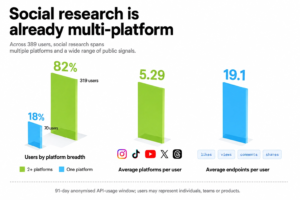
If you’ve ever tried to pull data from more than a couple of social platforms at once, you already know the feeling. Each one wants its own login. Each one hands back data in its own shape. And you’re the one stuck in the middle, gluing it all together by hand.
A social media data API called Prism from SocialCrawl is built to take that job off your plate. One request goes out, a lot of platforms answer, and you get one clean result back.
Let me walk you through what that actually means, without the jargon.
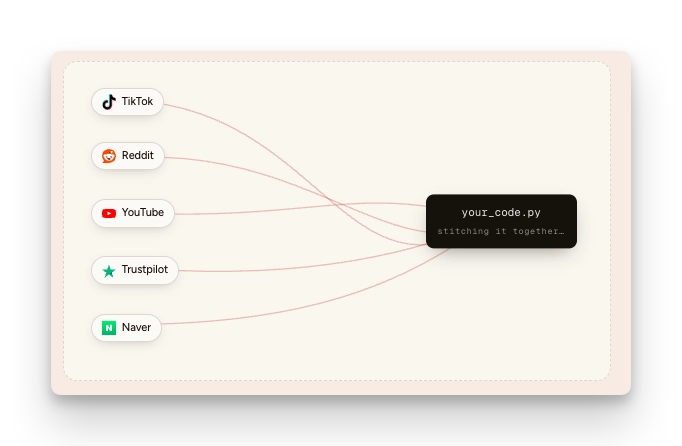
Here’s what usually happens when you want data from Reddit and TikTok in the same report.
Every platform speaks its own dialect. One needs a fresh API key and a token handshake. The next sends back data in a shape nothing else recognises, so you rewrite it before a single field is usable. Then there’s paging, where each platform sets its own rules for how much you can pull and how fast.
And once the raw data is finally in, the real work starts. You clean out the duplicates, work out what’s positive or negative, then score the whole thing. It’s all hand-written, and it’s all yours to keep alive when a platform quietly changes something next month.
That middle layer, the plumbing between you and every source, is where the weeks go. Nobody enjoys building it.
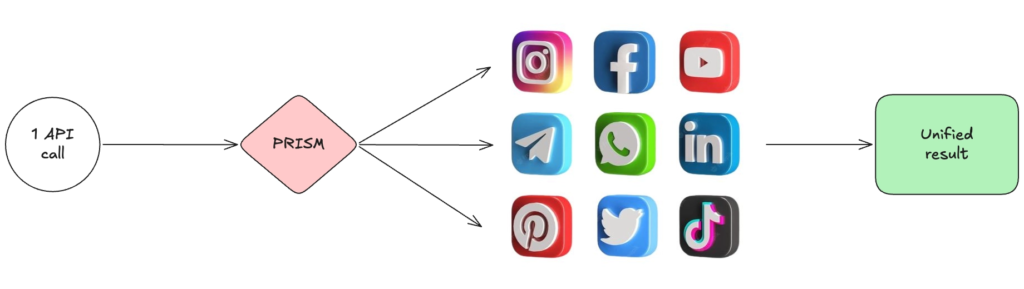
So here’s the simple version. A social media data API like Prism sits between you and all those platforms. You send one request. It goes out to every source that matters for your question, all at the same time. Then it joins the results and folds them into one object it hands back to you.
Think of it as one call doing the work of a dozen scrapers. You’re not wiring up each platform anymore. You ask a question, and you get a finished answer.
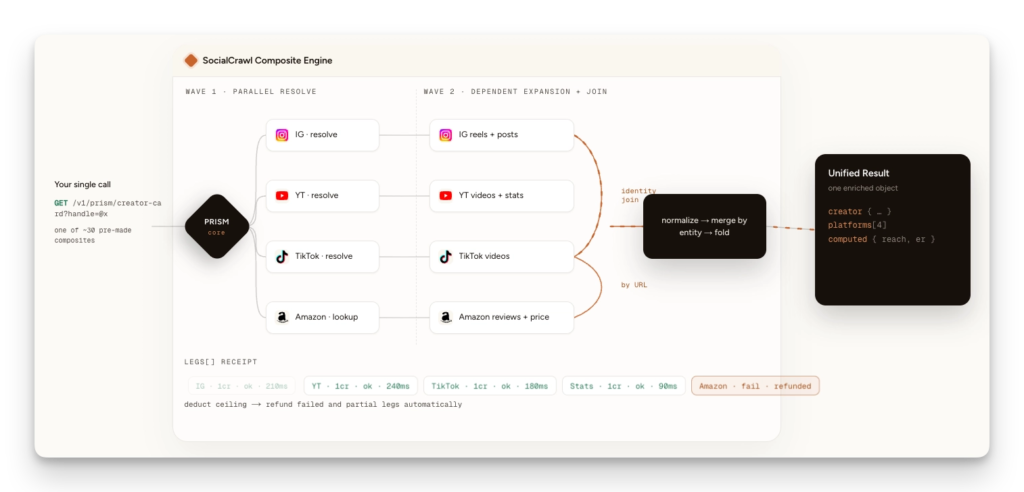
Under the hood there’s something SocialCrawl calls the Composite Engine, but you don’t need to hold that in your head. Here’s the gist.
Your one request goes in. Prism figures out every platform it needs, then calls them all in parallel instead of one after another. When some calls depend on others, like finding a profile first and then pulling its posts, it handles that order for you. Once everything’s back, it matches up the same brand or person across platforms and merges it into a single result.
There’s one more touch worth mentioning. Every result comes with a receipt. You can see which platform answered, how long it took, and what it cost. Nothing’s hidden, which is rarer than it should be.
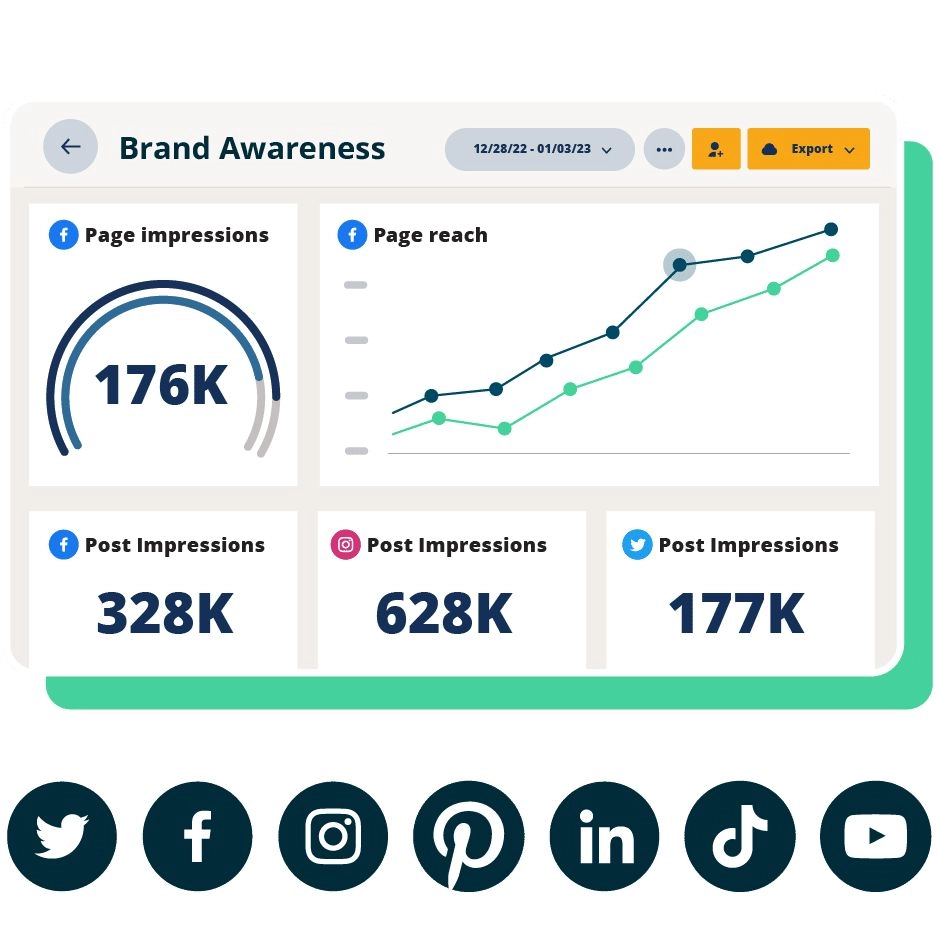
This is where it clicks. Prism ships with ready-made recipes, and each one is a finished job rather than a pile of raw data. A few that come up a lot:
Fake-review grading. Point it at a product and it grades the reviews from A to F, stress-testing the ratings across Amazon, Trustpilot, and the forums where people complain for real. No AI guesswork, just statistics you can reproduce.
Share of voice. It tells you how much of the conversation you own next to your rivals, blended across web and social, with the trend already worked out. No spreadsheet required.
AI visibility. This one’s newer and worth knowing about. It checks how often ChatGPT, Gemini, and Perplexity actually name your brand when someone asks, and which sites they point to instead of you. If you care about showing up in AI answers, this is how you measure it.
Forum listening. It pulls a topic across Reddit, Hacker News, and Korean sites like Naver, then surfaces the threads that matter. That Korean layer is genuinely hard to get from Western tools, so it fills a real gap.
Here’s the part that made me trust it a little more. You pay per finished answer, not per platform it touches. A flagship recipe runs 5 credits. And if coverage comes up short, say half the sources fail on you, it refunds part of that automatically. You never pay full price for half an answer.
Credits don’t expire either, and there’s no subscription or per-seat cost. That’s a calmer way to pay than most tools in this space, and it means an experiment that returns nothing doesn’t cost you much.
None of this needs you to be an engineer to follow. The idea is simple: stop being the glue between platforms, and let one call do the stitching for you.
If you’ve been dreading building all that wiring yourself, that dread is the thing a good social media data API is meant to remove. You’ve got enough on your plate already. This is one less thing to build from scratch.
👉 Claude Design Tutorial: Build A Social Media Dashboard
👉 How to Give Claude Code Social Media data
👉 Claude Code Tutorial for Beginners – Setup Guide
Most people still think about social media data in terms of posts, likes and follower counts. But a…
6 best Claude design skills for landing pages Ask an AI coding agent for a SaaS landing page…
Choosing the best AI coding model can feel like comparing four pages of benchmarks written in four different…